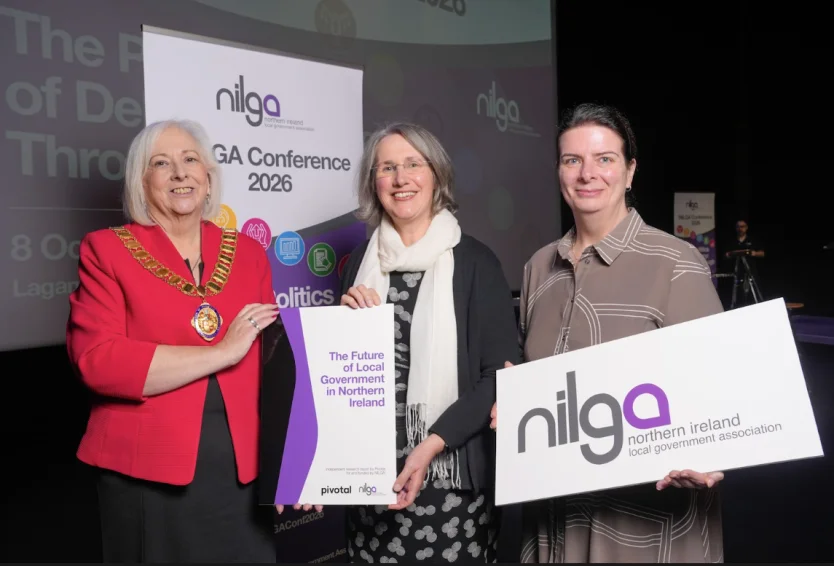




Ann Watt was on Good Morning Ulster this morning talking about Wednesday's UK Budget. What will it mean for Northern Ireland? (from 07:39) https://www.bbc.co.uk/sounds/play/m002mmqf
The overall situation facing Rachel Reeves remains very challenging. The economic growth that could boost tax revenues and living standards has so far proved elusive. A recent downgraded forecast for productivity alongside worsening figures for retail sales, unemployment and inflation have all contributed to lower expectations about future tax revenues. To meet her fiscal rules, it is estimated that the Chancellor needs to find an extra £25-30 billion in higher taxes or reduced spending. So overall, a tax raising Budget is expected.
The UK Government has been strongly criticised for adding to its own woes by chopping and changing its plans for tax changes, sometimes in the public domain. All this uncertainty has made consumers and businesses cautious, resulting in reduced spending, investment and growth in recent months.
So which taxes are set to rise? In the end, it looks like the pledge for “no new taxes on working people” will be kept - there will be no change to income tax, National Insurance or VAT. But continued freezing of income tax thresholds will raise a huge £38 billion by 2029-30 - effectively a tax rise without changing tax rates, as more people are dragged into higher tax bands. In addition, it looks like there will be a number of other smaller tax rises - leading possibilities include council tax on higher value properties, fuel duties (which have frozen for a decade), excise duties, gambling levies, tax relief on salary sacrifice pension contributions, amongst others.
On the spending side, the Government has been widely criticised for its recent U-turns on the winter fuel payment and cuts to disability benefits. This time around, the biggest new announcement looks to be the end to the ‘two-child limit’ in the benefits system (in place since 2017), which will be widely welcomed in helping lift large numbers of children out of poverty. It will mean a significant boost to household incomes for around 45,000 children in Northern Ireland (1 in 10 children here). Other benefits are said to be rising by 4%. New funding for lower rail fares on certain routes in England is expected.
Turning to Northern Ireland’s finances, on BBC NI Sunday Politics yesterday the Finance Minister said there were spending pressures of £400 million this year (plus the PSNI data breach costs). Unfortunately, there is unlikely to be much relief on this front in the Budget. Major changes to spending allocations for Departments are unlikely so close to last June’s three-year Spending Review, although there is a suggestion of some extra funding to reduce health waiting lists in England. Any new funding for England in devolved areas will be put through the Barnett formula, but the total amount coming to Northern Ireland seems likely to be small, and certainly tiny compared to the extra £640 million that came to NI in the Budget in autumn 2024. A reminder that big new spending announcements in England don’t necessarily happen in NI - it’s up to the Executive to make its own decisions on how to spend its funding.
One specific announcement expected is a new £16 million fund to support Northern Ireland business with post-Brexit trade.
Overall, the UK Government will be hoping that this Budget does at least three things. First, it desperately needs an upturn to economic growth to boost household incomes, increase tax revenues and help keep borrowing under control. Second, it will hope that the announcements provide some stability and certainty so that consumers and businesses have the confidence to step up spending and investment. Third, the Government will be keen to see the public and the markets’ reactions - does this Budget convince them that the Government has settled on a more stable course, or will it be back again this time next year looking to plug a fiscal gap once more?
For Northern Ireland, the immediate focus will remain on reducing the size of the projected overspend for this financial year. But attention will soon turn to setting a budget for next year, with the potential for a multi-year budget for the first time in a decade. A draft Budget for consultation is due before Christmas. Repeated budgetary crises in recent years suggest that big changes are needed in how public finances are managed, particularly a focus on public service transformation. Public services here face a double challenge - in many areas they are not providing an adequate level of service for the public, and at the same time budgets are constantly over-stretched. Demographic pressures are only going to make this more difficult as time goes on. Moving ahead by doing more of the same isn’t going to be enough - a step-change is needed if public services are going to be affordable now and into the future. The Executive needs to accelerate its efforts to transform how and where services are delivered, to ensure we are getting the very best for the public from the funding available. The upcoming multi-year Budget offers an opportunity to kickstart that process.