

Imagine this: your alarm goes off and you begin another ordinary day. You dress, have breakfast and set off for work. On the way, you witness a crime and from that moment, you become part of the criminal justice system.
After the incident, a Police Service of Northern Ireland (PSNI) Police Officer takes your details and statement to support the investigation. They may then prepare a case file for the Public Prosecution Service for Northern Ireland (PPS), where a Prosecutor will review the case and decide whether to prosecute the accused and if your evidence will be needed in Court.
Sometime later, a member of staff from the Victim and Witness Care Unit contacts you. They confirm you need to give evidence at Court and check your availability to attend the hearing. They are helpful, supportive and ensure you understand the process, your requirement to attend and what is expected of you. As a result, you rearrange annual leave, organise childcare, make your travel plans and prepare yourself for attending Court.
The day of the Court case arrives. As you make your way to the Court, you learn the hearing has been rescheduled. All the arrangements you made are now unnecessary and you know you will have to go through this process again.
Over the following months, communication is inconsistent. Hearing dates change, plans have to be rearranged, and uncertainty becomes a regular part of life. Eventually a new hearing date is fixed. Once again, you organise time off work, childcare and travel. Then, at the last minute, as you’re mentally preparing to re-live what you witnessed in the Court and be questioned about what you saw, you’re told the defendant has pleaded guilty. Your evidence is no longer required.
After months of waiting, repeated disruption and emotional strain and anxiety, your role as a witness is over without ever appearing before the Court.
Our new Criminal Justice Inspection Northern Ireland (CJI) Report on Witness Attendance in Criminal Court Proceedings, has found that experiences like this were common for men and women who were called as witnesses in Northern Ireland. Slow case progression, poor case readiness, numerous adjournments and ineffective ‘cracked’ trials, frequently resulted in unnecessary witness attendance.
At the same time, inconsistent communication, unequal delivery of witness entitlements and late cancellation notices negatively impacted witnesses’ trust and experience in the criminal justice system.
Impact on justice and policing
Witnesses are central to the fair and effective operation of the criminal justice system. Their attendance enables Courts to hear evidence, reach decisions and deliver justice. For this to happen effectively, criminal justice organisations need an improved structure for case progression, timely decisions about which witnesses are required, better communication and information-sharing and greater use of modern technology.
The Inspection examined the strategic, governance and policy framework for witness attendance. It focused on the shared responsibility of the PSNI, the PPS and the Northern Ireland Courts and Tribunals Service to secure witness attendance at criminal Court. It also looked at the arrangements to support case progression, achieve Witness Charter rights, improve outcomes for victims and defendants and reduce avoidable delay.
Since 2023, a range of initiatives have been introduced through the Speeding Up Justice Programme, a target within the Programme for Government 2024-27, and other wider justice reforms.
These include the establishment of the Commissioner Designate for Victims of Crime in Northern Ireland’s Office, Remote Evidence Centres, use of Registered Intermediaries and Sexual Offences Legal Advisers and a range of strategies aimed at improving services for victims and witnesses. While these initiatives have improved outcomes for victims and witnesses, they didn’t include case progression once a case was listed at Court.
This is not a new issue. Previous Inspection Reports consistently identified poor case readiness for Court as a key contributor to avoidable delay and poor outcomes for court users.
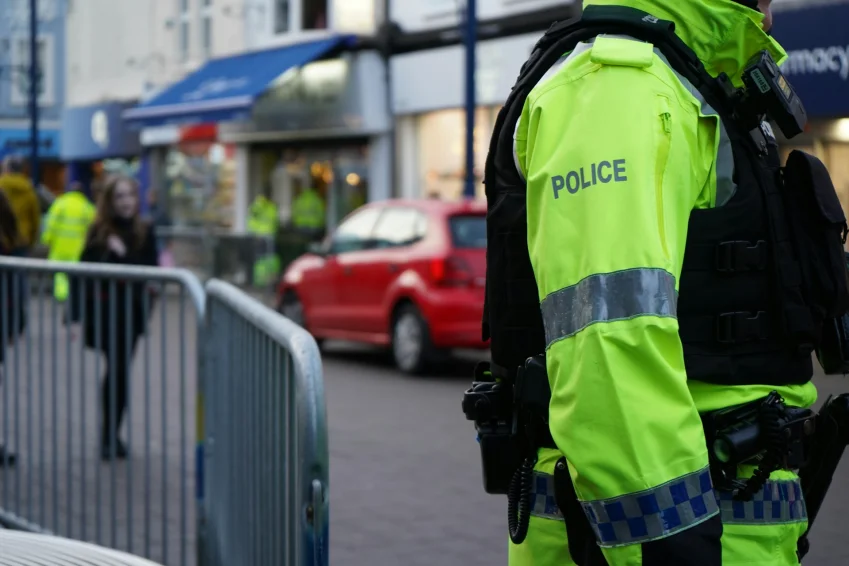
This Inspection also looked at the attendance of Police Officers and Forensic Science Northern Ireland (FSNI) staff as witnesses at Court. The findings were stark. In a survey undertaken for this 2026 Inspection, the majority of Police Officers and forensic staff who responded said they ‘rarely’ gave evidence and felt that the management of the witness attendance process was ineffective.
In addition, the high number of Court hearings that did not proceed had a significant impact on frontline policing. Between April 2024 and March 2025, Police Officer attendance at Court equated to 147,860 hours (or over 18,482 average working days).
As a result, Officers were routinely diverted from frontline policing duties, reducing operational capacity and generating substantial costs. Based on the 2024-25 police pay scales, the cost of Police Officer attendance at Court exceeded £4 million.
Looking to the future
The Report also highlighted positive findings. Since its introduction in 2012, the Victim and Witness Care Unit has provided victims and witnesses with a single point of contact throughout the prosecution process. Inspectors found evidence of commitment and recognised the important role the Victim and Witness Care Unit plays in supporting witnesses and facilitating access to information, entitlements under the Victim or the Witness Charter and services.
Although the Victim and Witness Care Unit provided important support once witnesses engaged with it, wider weaknesses in case progression, case management at criminal Court, information-sharing, accountability and technology limited the Unit’s impact.
CJI remains committed to working to improve the experience of those engaging with the criminal justice system after they have witnessed a crime. I have made four recommendations for improvement. At a leadership level, they aim to support case progression, reduce unnecessary witness attendance at Court, improve data collection, sharing and analysis between criminal justice organisations and make better use of modern technology. At an operational level, my recommendations call for earlier agreement of witness requirements, timely and consistent communications with witnesses, improved processes to release Police Officer witnesses from attending Court when not needed, and a more consistent recording of outcomes and reasons for case adjournment.
When the recommendations are implemented, they will help reduce avoidable delay, and support better efficiency and effectiveness, especially around the use of public money and increase community confidence in the administration of criminal justice.
James Corrigan is the Acting Chief Inspector of Criminal Justice Inspection in Northern Ireland. His role is to develop and deliver a programme of independent inspections and published reports that examine cross-cutting criminal justice issues and the work of the police, prosecutors, the criminal courts, probation, prisons and youth justice services among others. His work is focused on securing improvement and achieving a better justice system for all.
Pivotal Platform is a home for guest writers to contribute their perspectives on public policy debates in Northern Ireland. The views expressed by guest writers are not necessarily those of Pivotal.